LIVID Case Study · 2015 to 2016
travisfixes.com →
Livid Instruments
Managing Director · Acting CEO · 2015 to 2016

Built by three.
Run by one for fourteen months.
Hardware reality.

Livid Instruments was an Austin MIDI controller company, founded 2004 by Jay Smith, Travis Redding, and Peter Nyboer. Jay was diagnosed with ALS in May 2014. I came in February 2015 as Managing Director and Acting CEO. Took the Minim Kickstarter to 362% of goal: $145,170 raised, 1,304 backers, funded inside 36 hours. Cut manufacturing overhead in half in 90 days. Scaled the controller and Builder consulting business 300%. Bitwig formal partnership at NAMM 2014; deep integration with Ableton Live and Native Instruments.

Client
Livid Instruments
Timeline
Feb 2015 to Apr 2016
Location
Austin, TX
Era
Hardware operator
Managing Director Acting CEO Kickstarter Lead Manufacturing Pivot Bitwig Partnership Hardware Operator
In the ecosystem
Bitwig
Formal partnership · NAMM 2014
Ableton
Live integration
Native Instruments
Traktor · Guitar Rig
Kickstarter
Minim · 362% funded
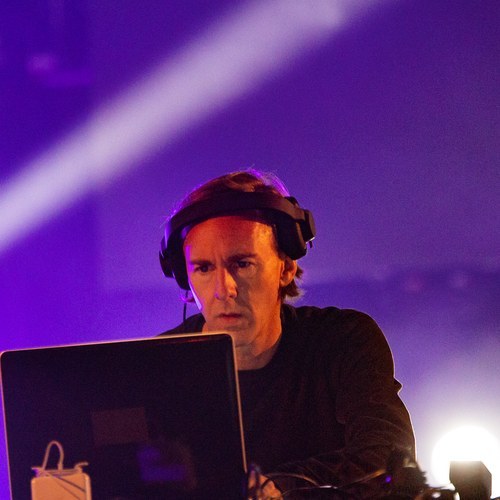
Richie Hawtin
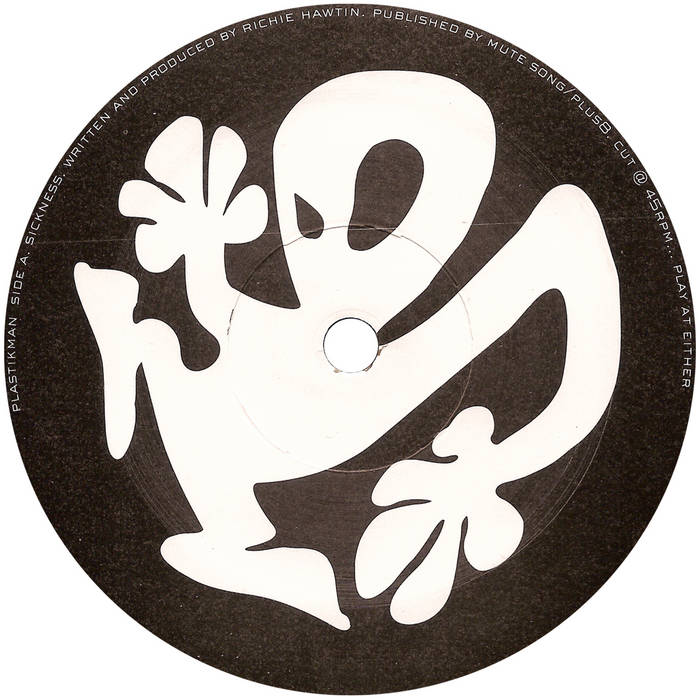
Plastikman · CNTRL:R co-design
Marc Houle
M_nus · CNTRL:R co-design
Moldover
Guitar Wing co-design
Sullivan King
Guitar Wing artist
Vernon Reid
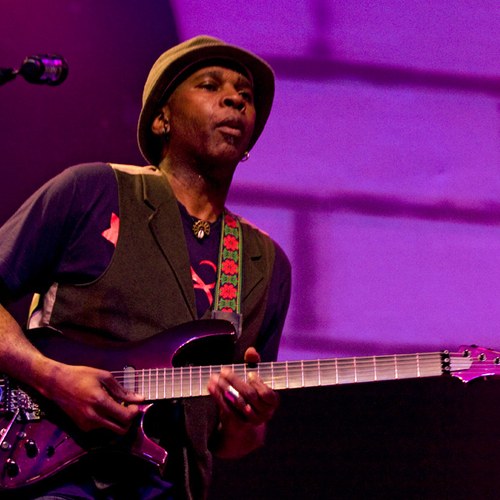
Living Colour · Guitar Wing
Laura Escude
Laura Escudé · Custom OhmRGB
Plastikman / Plus 8 Records
Plus 8 · Acquaviva on the board
M_nus Records
M_nus · Hawtin's label
Season Group
EMS partner · Carl Hung
Bitwig
Formal partnership · NAMM 2014
Ableton
Live integration
Native Instruments
Traktor · Guitar Rig
Kickstarter
Minim · 362% funded
Richie Hawtin
Plastikman · CNTRL:R co-design
Marc Houle
M_nus · CNTRL:R co-design
Moldover
Guitar Wing co-design
Sullivan King
Guitar Wing artist
Vernon Reid
Living Colour · Guitar Wing
Laura Escude
Laura Escudé · Custom OhmRGB
Plastikman / Plus 8 Records
Plus 8 · Acquaviva on the board
M_nus Records
M_nus · Hawtin's label
Season Group
EMS partner · Carl Hung
The grid we built around
362%
Minim Kickstarter funding
$145K
Raised on a $40K goal
1,304
Backers · funded in 36 hours
50%
Manufacturing overhead cut in 90 days
300%
Controller + Builder business scaled
About the work

Real product.
Thin math.
Founder fighting.

Livid Instruments was an Austin MIDI controller company, founded 2004 by Jay Smith (CEO), Travis Redding (COO), and Peter Nyboer (Director of Software). The line included Ohm64, OhmRGB, Base, Block, DS1, Code, Alias 8, and the CNTRL:R, the performance instrument Jay co-designed with Richie Hawtin and Marc Houle. Beloved by the people who used the gear. Built in Austin, by hand, since 2004.

Jay was diagnosed with ALS in May 2014. I came in as Managing Director and Acting CEO in February 2015, with Jay's family, the board, and the team. The company was real, the customer base was real, and so was the math: hardware margin at our volume was thin going in. Fixed shop overhead in Austin, twelve-to-eighteen-month Kickstarter fulfillment cycles, founder dependency at the design layer. Every move was math against that.

Fourteen months. Ran the Minim Kickstarter. Pivoted manufacturing to outsourced production with Season Group in Hong Kong (Carl Hung, our non-executive director and my mentor on the supply-chain side) and cut overhead in half in 90 days. Scaled the controller and Builder consulting business 300%. Bitwig formal partnership at NAMM 2014 already in place. Deep integration work with Ableton Live and Native Instruments. Operator work with weight on it.

Jay is still building. He writes with his eyes. He co-invented Independence Drive (an eye-gaze wheelchair steering system) with Steve Gleason. He runs the Every 90 Minutes Foundation. The DoItForJay annual fundraiser is in its twelfth year.

The campaign

Pocket-sized wireless control.
362% funded.

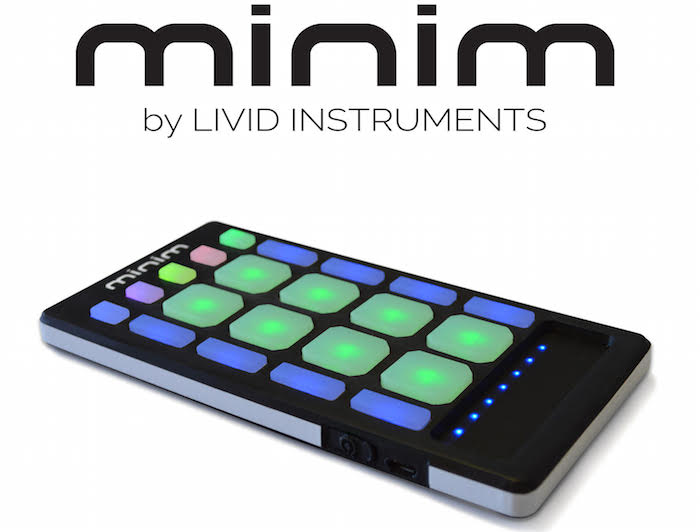
Minim was a pocket-sized wireless MIDI controller for mobile devices and laptop setups: 8 pads, touch fader, RGB LEDs, 3D motion sensors, Bluetooth MIDI. The first product Livid took to Kickstarter under my watch. Designed by the team. We took it to Kickstarter to fund the production run.

Launched July 29, 2015 at 11:11 AM CT. Funded inside 36 hours. Final tally: $145,170 raised on a $40,000 goal, 1,304 backers, 362.93% funded. $99 backer pricing, $149 retail. Press out of the gate from FACT, Synthtopia, DJ TechTools, DJWORX, Sonic State, Sound on Sound, Electronic Musician. The campaign threaded the needle that hardware Kickstarters keep failing on: tight scope, real product, real demo video, manufacturing plan that survived contact with delivery.

I was on camera in the Kickstarter video. Co-wrote the performance song and played on it. The deliverable was a hardware product, not a deck.

Minim by Livid Instruments · pocket-sized wireless MIDI controller
Livid Minim controller in use
Also on the line

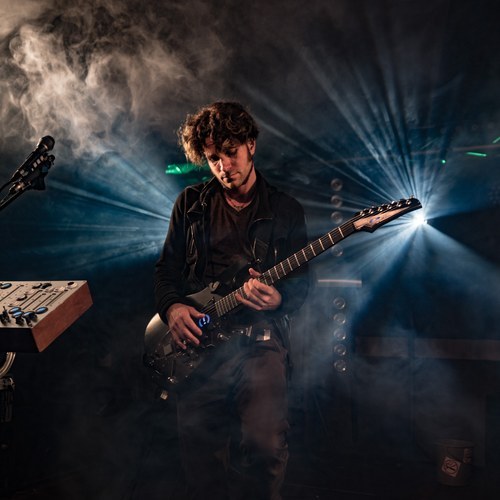
Guitar Wing. 3D wireless control for guitar and bass.

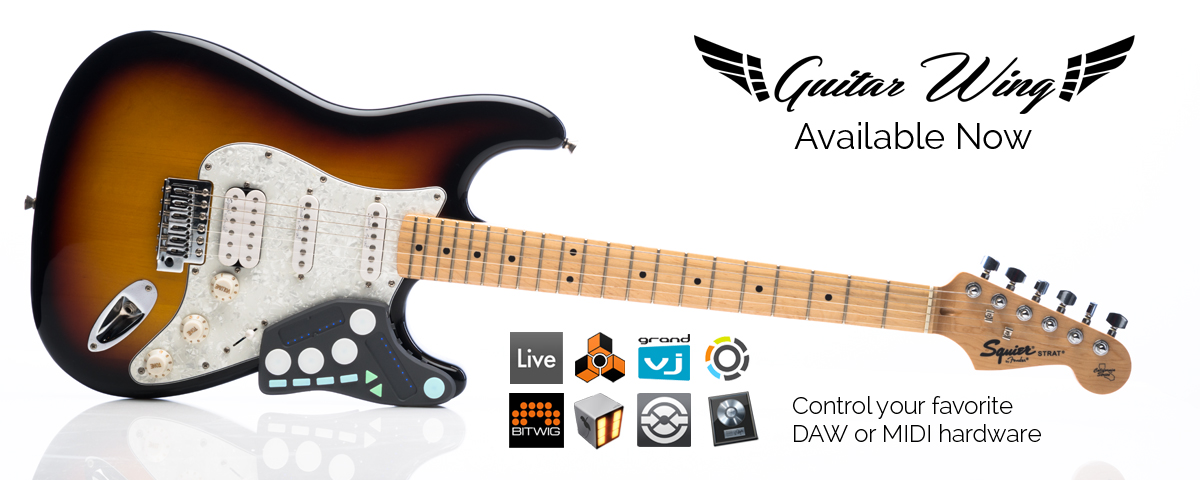
Guitar Wing launched on Kickstarter in January 2014, before my tenure, and shipped through it. Co-designed by Jay with Moldover (the controllerism godfather), with input from Vernon Reid of Living Colour. A wireless controller that mounted on the body of a guitar so live performers could trigger MIDI and effects without taking their hands off the strings. The world's first controller with native Bluetooth LE MIDI for OS X Yosemite and iOS 8.

Sound on Sound's Bob Thomas reviewed it positively in April 2015, inside my tenure: "a great concept, an essential audition." Bundled with WingFX (developed by Jeff Cooper) and templates for Ableton Live, Logic Pro, MainStage, Bitwig Studio, Max, NI Guitar Rig, NI Traktor, Reason. Sullivan King built his early live rig around it. Shaunna Hall (P-Funk, 4 Non Blondes) endorsed it.

Livid Guitar Wing wireless controller mounted on guitar body
The line

The product line.

Livid shipped four categories during this stretch. Each had its own customer, its own margin profile, and its own manufacturing flow.

MINIM
Pocket wireless control · Kickstarter
Pocket-sized wireless MIDI controller for mobile devices and laptop setups. 8 pads, touch fader, motion sensors, Bluetooth MIDI. (The Kickstarter I directly led, from campaign through fulfillment.)
GUITAR WING
Wireless control for guitar and bass
A wireless controller mounted on the guitar body. Co-designed by Jay with Moldover, with input from Vernon Reid. Sullivan King built his live rig on it.
CONTROLLERS
Performance + production catalog
DS1 (8-channel mixer co-designed with Dubspot), Base, OhmRGB, Block, Code, Alias 8 (bundled with Bitwig 8-Track), and the CNTRL:R (co-designed with Richie Hawtin and Marc Houle). Steady revenue, established customers, hand-finished in Austin.
BUILDER
Custom-controller consulting
The bespoke side of the company. Where the business scaled three times over. Custom controllers for artists, studios, and venues with control-surface needs the catalog couldn't meet.
Software integrations

The software ecosystem.

If you make MIDI hardware, you live or die on whether the software people use natively maps to your controller. We had one formal partnership and two deep integrations.

Bitwig
Formal partnership · NAMM 2014 · 8-Track bundled
Ableton
Live integration · amounra Python scripts
Native Instruments
Traktor · Guitar Rig templates

"ALS is not an incurable disease.
It is an underfunded one."

Jay Smith · Every 90 Minutes Foundation

The pivot

Half the overhead.
Ninety days.

The fastest way to tank a hardware company is to keep manufacturing in-house when the math no longer supports it. The slower way is to keep doing it because that's how the founders built it.

Pre-pivot, the line ran out of the Austin shop. Gabe (utility, assembly, with us since the original Ohm), Del (machinist, raw stock to parts), Ryan (electronic assembly lead, pick-and-place, hand soldering), and Kelly (shipping, soldering, inventory) ran the floor under Mark DeMay (Lead Engineer / PM) and Justin Moon (Senior Engineer). They built the catalog by hand.

We moved production to Season Group, a Hong Kong EMS, with Carl Hung (CEO of Season Group, our non-executive director) mentoring me through the supply-chain side of the move. Overhead dropped 50% inside ninety days. The product quality stayed at parity. The schedule held. The shop team that had been doing in-house assembly was reassigned to higher-margin work on the Builder side.

The hard part wasn't the manufacturing math. The hard part was making the call to change the way the company operated while the founders were still alive and watching it happen.

The team

Who built the company.

Naming the people because operator stories without names are not honest.
(I'm probably missing a few. Send me names if you know them.)

Jay Smith
Co-founder · CEO
Inventor of the Viditar (Popular Science Inventor of the Year nominee). Former member of Sinch on Roadrunner Records. Diagnosed with ALS May 2014. Still building. Co-invented Independence Drive with Steve Gleason. Runs the Every 90 Minutes Foundation.
Travis Redding
Co-founder · COO
The other Travis on the company page. Different person. Same first name made for some confusion in the email threads.
Peter Nyboer
Co-founder · Director of Software
Built the firmware and the Python integration scripts that let Livid hardware live inside Ableton, Bitwig, and the rest. Now Product Director at Buchla USA.
Mark DeMay
Lead Engineer · Product Manager
Carried the hardware design + product management. Later co-founded Remidi with Andrea Baldereschi (MIDI glove, Kickstarter funded 3x, SXSW 2016).
Justin Moon
Senior Engineer
Hands on the firmware, deep on the bench. Went on to DJ TechTools after Livid, working with Ean Golden.
K.C. Taylor
Shop manager · Manufacturing
Ran the Austin shop floor. Every unit that left the building went past K.C. first.
Rich Sandoval
Team · In the build
In it with us. Part of the small Livid team that built the catalog, shipped the campaigns, and got laid off when the math finally ran out.
Jeff Cooper
WingFX · Software
Wrote the WingFX software that turned the Guitar Wing from a control surface into an actual live performance instrument. Quiet engineer, deep work.
Rachel Robbins
Admin · Pricing · Sales ops
Ran the price lists, the orders, the back-office machinery. Pulled the threads that kept the shop and the customers connected.
Missy Mekosh
Jay's wife · Operator behind the operator
Met Jay in 10th grade. Married 2003. Learned nursing, works full-time, manages the round-the-clock care team. None of the rest of this exists without her.
The shop
Gabe · Del · Ryan · Kelly
Built every Livid product by hand in Austin until the pivot moved production to Season Group. They were the math behind the margin.
Artists on the hardware

Who played on our hardware.

A small set of artists co-designed the gear with Jay. Many more played it on stage. The roster reads like a controllerism census from 2010 to 2016.

Many of the others who played with our controllers. Atticus Ross + Trent Reznor (How to Destroy Angels, two CNTRL:R White Editions). Eliot Lipp (signature OhmRGB Slim, Pretty Lights Music). Mad Zach (DJTT collab edition). Robert DeLong (Builder custom). Cherub (Elements eurorack: purple sparkle, yellow arcade buttons, zebrawood crossfader). Phutureprimitive (Builder live rig). Paul van Dyk (DS1, custom 4D mapping). 3LAU + ill.Gates (OhmRGB Slim). Sullivan King (Guitar Wing live rig; first EDM artist signed to Schecter). Phaeleh + Solee (CNTRL:R live). Shaunna Hall, P-Funk and 4 Non Blondes (Guitar Wing). Herbie Hancock + Thirty Seconds to Mars (customer roster). Duane Pitre (Alias 8 studio). Johnny DeKam, VDMX creator (Ohm + ViXiD live AV). Ean Golden, DJTT (ecosystem partner, hired Justin Moon after Livid). Tony Lannutti + Jamie Stem (with Jay through the Sinch and Ocular Noise Machine years).

Every 90 Minutes Foundation

Jay's still around.
And still working.

I wasn't part of this work; my time at Livid was the catalog and the campaign. But the operator story doesn't make sense without saying this: Jay was diagnosed with ALS in May 2014 and is still working twelve years on. He runs the Every 90 Minutes Foundation (100% of donations to ALS research). He co-invented Independence Drive, an eye-gaze wheelchair steering system, with Steve Gleason and engineering assistance from Mark DeMay.

Livid Instruments
What happened after

Livid wound down.

I walked away empty-handed in April 2016. Carl Hung and Helen Matthews (Richie Hawtin's manager) were on the "Leaving Livid" email thread. There was a Berlin opportunity through Helen that didn't pan out.

After I left, Livid kept moving for a while. The forum stayed live through September 2019. By 2020 the company was understood to be finished. There was no formal dissolution announcement. The website is still up as a static company page. The math at our volume never converged on a viable unit-economics picture, and that didn't change after I was gone. We tried.

The people who came through Livid built more after. Mark DeMay and Andrea Baldereschi co-founded Remidi (Kickstarter funded 3x in 2016). Andrea later co-founded Scribit with Carlo Ratti at MIT (TIME's 100 Best Inventions of 2019). Justin Moon went to Ean Golden's DJ TechTools, where the MIDI Fighter line was the throughline of the controllerism scene. Peter Nyboer went to Sensel and then to Buchla USA, where he runs product. Jeff Cooper, who wrote the WingFX software, dropped out of public view; if you know where he landed, tell me. Jay kept working through Every 90 Minutes and DoItForJay.

Thesis

Same system.
Different substrate.

A hardware company is a system that ships physical units against fixed overhead, supply-chain latency, and a founder who can't be cloned. An AI infrastructure company is a system that ships software against compute, API dependency, rate ceilings, and the same founder problem. The substrate changes. The operator problem doesn't.

Below is the literal map between what we built at Livid and what I run now.

Kickstarter execution Shipping AI on a deadline that's public, with stakeholders watching, where the demo has to work the first time.
Manufacturing pivot to Season Group Cost-cutting AI ops: when one provider, one path, or one in-house process is bleeding margin, move it before the bleed becomes the story.
Bitwig formal + Ableton / NI integration Multi-vendor AI stacks: getting Anthropic, OpenAI, Google, and the open-source layer to play nicely with each other for a single product surface.
Twelve-to-eighteen month KS fulfillment Token-cost lag and rate-limit ceilings: the bill arrives long after the demo did. Model both into the unit economics on day one.
Founder dependency at the design layer Single-key-person AI systems: prompt libraries, custom evals, and tribal knowledge that lives in one head. The structure has to survive the person.
Acting CEO with weight on it Operator work in environments where leadership is unstable: founder in transition, board in flux, market in motion. Build the structure that survives the personnel.
What I'd do differently

The math didn't work.
I got my read too late.

I was deeply underpaid as Managing Director. I was brought in to save the day. The Kickstarter delivered. The manufacturing pivot to Carl Hung at Season Group delivered. The Bitwig partnership delivered. The DJ TechTools partnership and the MIDI Fighter engineering redesign delivered. The Builder business scaled up. The shop scaled down. The dead-asset and tooling liquidations covered what they could. Everybody got paid out, in order. Then the team got laid off and the rest of the assets were liquidated. When the math finally caught up, there was nothing left to owe.

I'm not bitter. I'm pragmatic. Operator pay tied to a salary line on a balance sheet that's already underwater is a structural mistake. The next version of this gig, the comp model is tied to the change I'm there to make: equity vesting on milestone delivery, a survival bonus on closure, or a flat consulting rate paid weekly out of the operating account I'm being asked to fix. Not a dwindling salary line waiting on revenue that doesn't exist yet.

The other thing I'd do is have the structural conversation in month one. Honestly, I was naive. Hardware margins at our volume, with fixed shop overhead and a twelve-to-eighteen month Kickstarter fulfillment cycle, did not converge on a viable picture. The pivot to Season Group bought time. It didn't change the underlying math. It took me too long to untangle conflicting numbers across the books and read the operating reality underneath them. I trusted the inputs I was being given, and I shouldn't have trusted them all. We did some things we probably shouldn't have been able to do from where we sat. In the end the math wins every time.

I would have taken harder stances. I would have put more of this in front of the board sooner. Jay was fighting ALS and still giving me leadership direction; I was trying to lead with compassion for someone in real-time decline. That tradeoff was a leadership choice, and the cost of it was that some hard structural calls happened later than they should have. That is a thing I have to own.

And the grief part. We worked this gig under a clock nobody fully acknowledged. Jay's body was failing. The math was running. The co-founders had to walk away because we couldn't pay them. I didn't build enough room for the team to grieve in real time. If I were running it again, the emotional weight of what was happening would be a part of how the team operated, not a thing we walled off from the spreadsheets. The work would have held the same. More of the people would have come out the other side intact.

Watch · Read

More.

If this moved you

Support Jay's work directly. The Every 90 Minutes Foundation puts 100% of donations into ALS research. DoItForJay supports Jay's care. doitforjay.org  ·  every90minutes.org